
Showing posts with label article. Show all posts
Showing posts with label article. Show all posts
Saturday, April 15, 2017
4/15/1846 Abraham Lincoln, crime writer

Thursday, January 7, 2016
1/7/1939 The Golden Age of Detective Fiction is coined

I found this out in Martin Edwards' excellent book The Golden Age of Murder.
Monday, January 4, 2016
1/4/1987 Burgess on Holmes

Sunday, December 6, 2015
12/6/1958 "What to do with an Ageing Detective"

What was unusual was that this piece was an interview between the author and her character. And Albert has a few things to get off his chest, mostly concerned with the fact that he was getting too old to do the kinds of stunts she kept handing him.
"[E]verybody knows how old I am. You saw to that, fixing it as the same age as the century so we shouldn't get muddled."
Allingham was neither the first nor last author to record a chat with a character. If you don't happen to have a complete run of Time and Tide you can find this one in her book The Return of Mr. Campion: Uncollected Stories.
Monday, November 30, 2015
11/30/1974 Eric Ambler sorts the rubbish

Ambler wrote spy novels for more than forty years, starting in 1936. He won the Edgar and Gold Dagger Awards, each twice. One of his screenplays was nominated for an Oscar.
Source: Peter Wolfe, Alarms and Epitaphs: The Art of Eric Ambler.
Monday, February 2, 2015
2/2/1985 A real cop investigates Cagney and Lacey
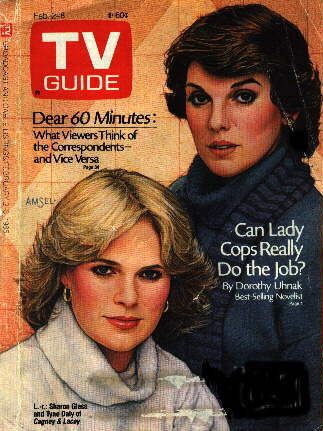
In the article she explains how, in 1955, as an undercover New York City Transit officer she disarmed and busted a rapist, and suddenly became famous. She reports on some of the humiliating encounters with the media that followed - A female cop! And she's a hero! How hilarious!
Uhnak's conclusion about the TV cops? "I'd walk through a dark alley with Cagney or Lacey behind me. That is the ultimate compliment from one police officer to another."
Tuesday, January 20, 2015
1/20/1945 Who Cares Who Killed Roger Ackroyd?
 January 20 1945. The most famous attack on mystery fiction was an article by critic Edmund Wilson, which appeared in the January 20, 1945 issue of The New Yorker. "Who
Cares Who Killed Roger Ackroyd?" declares Dorothy L. Sayers' The Nine Tailors "one of the dullest books I have ever encountered in any field." He also calls Ngaio Marsh's writing "unappetizing sawdust."
This piece was actual a response to readers who had complained about an earlier piece in which he described Rex Stout's work as "sketchy and skimpy," and declared Agatha Christie "literally impossible to read." He admitted to liking Raymond Chandler's Farewell, My Lovely, but said it was an adventure story, not a detective story. For the record, he also loathed J.R.R. Tolkien and H.P. Lovecraft.
Subscribe to:
Posts (Atom)