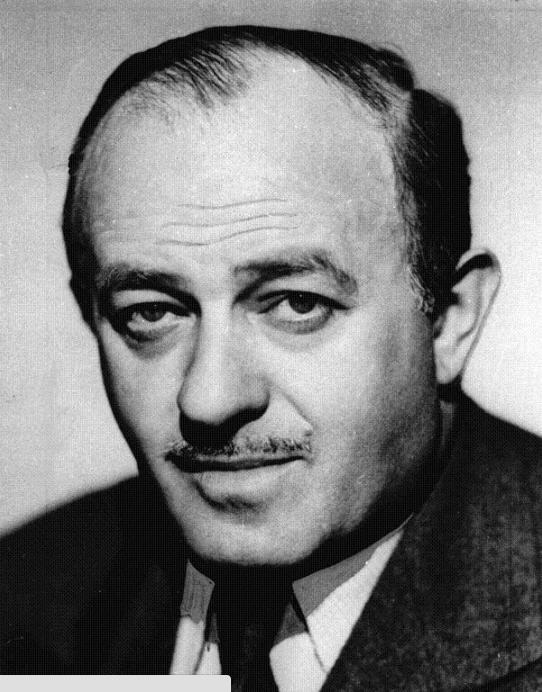
February 28, 1894. Ben Hecht was born on this date in New York City. He was considered one of the greatest Hollywood screenwriters. He actually won the first Oscar for screenwriting, with a crime movie called Underworld. Looking back ninety years it seems like the most memorable thing about that flick is the nicknames of the characters: Weed, Rolls Royce, Feathers, Buck, and Slippy. Four years later he wrote Scarface.
His greatest achievement related to the crime field may be The Front Page, a screwball comedy co-authored with Charles MacArthur, which was a Broadway hit and has been filmed three times, four if you count Switching Channels. It is the story of Hildy Johnson, a reporter about to quit in favor or a respectable job, who meets an escaped convict, a man sentenced to be executed ondubious grounds. Hildy needs help from his editor, a manipulator who will do anything to keep his star reporter on the job.
Hecht's many other credits include several Hitchcock movies. Among the ones for which he received a screen credit: Notorious and Spellbound.
.
Tuesday, February 28, 2017
Monday, February 27, 2017
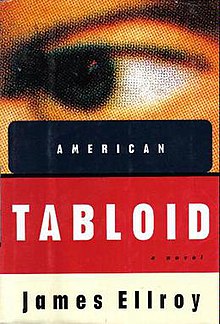
2/27/1995 American Tabloid is published
February 27, 1995. This date saw the publication of American Tabloid, James Ellroy's novel which Kirkus Reviews described as a " lurid, volcanic historical epic." It involves J. Edgar Hoover, Howard Hughes, Jimmy Hoffa, John F. Kennedy and his brother Bobby, and a plot to catch JFK with a call girl, among other things. Time called it one of the best books of the year.
Sunday, February 26, 2017
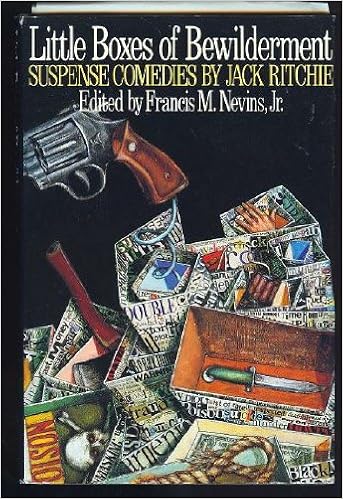
2/26/1922 The Presence of Jack Ritchie
February 26, 1922. One of the truly great authors of humorous short mysteries was born on this date in Milwaukee, a city where many of his works were set. His greatest character was Henry Turnbuckle, a police detective whose unearned self-confidence was matched by his bad luck. You see, Henry read all the crime novels and expected reality to conform to its cliches. But in a Turnbuckle story if two of the suspects are identical twins that will turn out to have nothing to do with the solution. And in one story after Henry gloriously announces the identity of the killer the assembled suspects not only proves him wrong but then conclude that the killer was someone else - a person no one had ever mentioned to Henry at all.
Another great Ritchie character was Cardula, a private eye who happens to be a vampire.
He also invented (or at least perfected) a subgenre I call the Unknown Narrator, where the reader knows nothing about the main character except what other people say about him, which turns out to be dramatically wrong. One example is "The Absence of Emily," which won him an Edgar.
But Ritchie;s biggest success may have been "The Green Heart," which begins "We had been married three months and I rather thought it was time to get rid of my wife." This tale of a would-be homicidal husband was made into the movie A New Leaf, and later into a Broadway play.
Ritchie's curse was that he was a master of the short when audiences demanded long. As Donald E. Westlake said, he was, "a miniaturist in the age of elephantiasis."
Another great Ritchie character was Cardula, a private eye who happens to be a vampire.
He also invented (or at least perfected) a subgenre I call the Unknown Narrator, where the reader knows nothing about the main character except what other people say about him, which turns out to be dramatically wrong. One example is "The Absence of Emily," which won him an Edgar.
But Ritchie;s biggest success may have been "The Green Heart," which begins "We had been married three months and I rather thought it was time to get rid of my wife." This tale of a would-be homicidal husband was made into the movie A New Leaf, and later into a Broadway play.
Ritchie's curse was that he was a master of the short when audiences demanded long. As Donald E. Westlake said, he was, "a miniaturist in the age of elephantiasis."
Saturday, February 25, 2017
2/25/1981 EQMM is forty
February 25, 1981. The issue of Ellery Queen Mystery Magazine with this cover date celebrated the fortieth anniversary of that great institution. It featured stories by Ruth Rendell, Simon Brett, Michael Gilbert, James Holding, and (of course) Edward D. Hoch, among others.
Friday, February 24, 2017
2/24/1964 A Right to Die is claimed
February 24, 1964. Rex Stout's A Right to Die begins on this date when an African-American anthropologist named Paul Whipple asks Nero Wolfe to prove his son did not commit a murder. Obviously it was Stout's opportunity to comment on the civil rights movement, but some fans think it is one of his less successful books because of a tactical error the author made.
You see, Paul Whipple appeared in Too Many Cooks as a college student. Decades later, here he is with a grown son, and Wolfe and Archie haven't aged a day. Whipple should have demanded to search their attic for mysterious paintings.
Thursday, February 23, 2017
2/23/1993 Murder in Mellingham
February 23, 1993. This date saw the release of Murder in Mellingham, the first novel in Susan Oleksiw's series about a small town on the New England coast. Publishers' Weekly said "Oleksiw's mystery starts slowly, and her upper-class suspects are
somewhat stodgy, but the ordinary citizens of Mellingham--the cops, the
restaurant owners and lifeguards--are acutely, affectionately rendered."
Wednesday, February 22, 2017
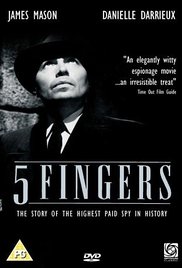
2/22/1952 Five Fingers open
February 22, 1952. On this day the movie Five Fingers premiered. James Mason starred in a story of espionage in Turkey during World War II. It was based on Operation Cicero, a book by Ludwig Carl Moyzisch, which told the true story of Elyesa Bazna, a Nazi spy who worked as valet to the British ambassador.
It was nominated for two Oscars (Best Director and Best Screenplay). The MWA gave it the Edgar for Best Motion Picture. I've never seen it. Have you?
Subscribe to:
Posts (Atom)