Showing posts with label 1970. Show all posts

Thursday, September 7, 2017

9/7/1976 Miss Marple's graceful exit

September 7, 1976.  This day saw the American publication of Sleeping Murder, which Agatha Christie wrote during the second World War and tucked away to be a posthumous curtain call for herself and Jane Marple, the beloved spinster from St Mary Mead.

A newlywed has an apparent deja-vu memory of a murder.  Is it ESP, or something more sinsiter.

Kirkus Review said: "This is Miss Marple at her noticing, unobtrusive, kindly best--a perfect envoi."

Friday, August 4, 2017

8/4/197? Smiley's People are contacted

August 4, 197?.  At precisely noon on this date a Russian emigrant woman in Paris was accosted by a mysterious stranger who claimed to have news about her daughter, left behind in the Soviet Union many years before.  The chain of events that followed forced brilliant spy George Smiley out of retirement, and led to the death of an old Russian general who claimed to have "three proofs against the sandman."  Don't you love le Carre's way with a code phrase?  Smiley's People was the climax of the Quest For Karla trilogy.

Sunday, July 30, 2017

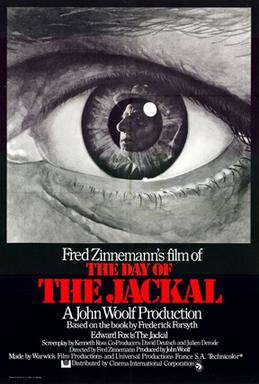
7/30/1973 Today is the day of the jackal

July 30, 1973.  The Day of the Jackal was released this day.  Fred Zinnemann directed the film version of  Frederick Forsyth's first novel, about an attempt to assassinate Charles DeGaulle.

Tuesday, July 4, 2017

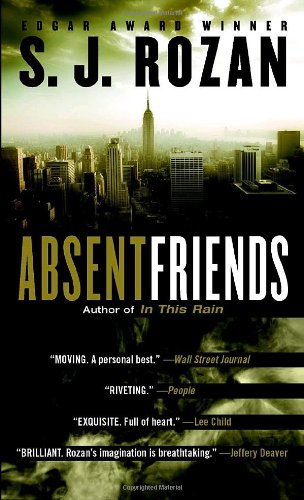
7/4/1976 In which friends are absent

July 4, 1976.  S.J. Rozan's first non-series mystery is all about the after-effects of 9/11 on the lives of New Yorkers, but it actually starts on Independence Day in the Bicentennial year, when her characters were just kids. 

“Rozan shifts among several narrators and between present and past in this riveting offering reminiscent of Dennis Lehane’s Mystic River.  An unforgettable elegy to the clear September morning that forever changed our lives.” –Booklist

Sunday, June 25, 2017

6/25/1971 Talking about Shaft

June 25, 1971. This date saw the release of the movie Shaft, based on the novel by Ernest Tidyman.  Directed by Gordon Parks and starring Richard Roundtree, it is considered the first major film of the "blaxploitation" genre.  It led to a dozens of rip-offs, and a few sequels, and saved MGM from bankruptcy.  Oh, it won an Oscar for that memorable Theme.  And in 20oo it made the National Film Registry.

Wednesday, April 26, 2017

4/26/1975 McCloud rides onto the cover of TV Guide

April 26, 1975.  McCloud ran for seven years but only produced 45 episodes.  Sounds almost BBC, doesn't it?  No, it was very American, but part of NBC's Mystery Movie series, along with Columbo and some lesser lights.  Dennis Weaver starred as a Taos, New Mexico lawman shipped east to teach them New Yorkers a thing or two.  The ever popular fish out of water, rube- outsmarts-city-slicker theme.

This is his third appearance on the cover of TV Guide, and this time he brought along a couple of castmates.

Tuesday, April 4, 2017

John Ball's home invasion

April 4, 1976.  John Ball was a successful writer from the start.  His first novel In The Heat Of The Night, introduced his most successful character, Virgil Tibbs, won the Edgar for Best First Novel, and was made into an Oscar-winning movie and a TV series. 

One thing he did with his new money was start collecting jade.  Unfortunately those precious stones collected unwanted attention.  On this date, early in the morning, Ball opened the door and found himself looking at a huge man with a .38 automatic in his hand.  Ball, with a black belt in karate, decided not to fight.  He was soon bound in masking tape, barely able to breath.  In less than twenty minutes the precious jade figurines "some of which I had carried back from the Orient on my lap to guard against breakage," had been dumped into a pillow case and carried off.

The cops, using a variety of methods - including hypnosis! - identified the bad guy, who was caught and convicted. 

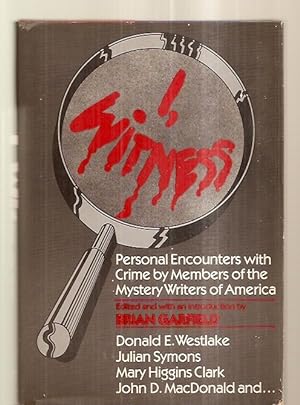
You can read Ball's whole account of the ordeal (titled "211 Dossier") in I, Witness, a remarkable collection of essays by mystery writers about their experiences with true crimes.  My favorite part of his essay is the TV reporter who asked him to "please remove the bust of Hitler from the mantlepiece" before they started filming.  Ball explained that it was Poe not Hitler (his Edgar award), and it wasn't going anywhere.

Monday, March 27, 2017

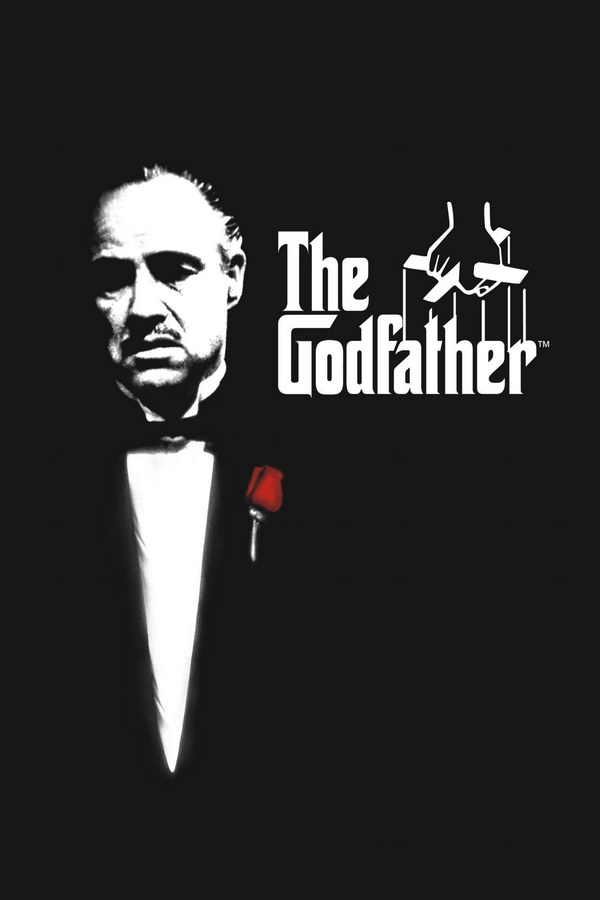
3/27/1973 The Godfather makes an offer Oscar can't refuse

March 27, 1973.  On this date Francis Ford Coppola's adaptation of Mario Puzo's stunning mafia novel, The Godfather, won the Oscar for Best Picture.  It also won for Best Actor and Best Adapted Screenplay.  Oh, and eight other nominations.

The Mystery Writers of America, having one of their special moments, gave the Edgar for Best Motion Picture to Sleuth, which is reasonable, I guess.  But the other movies they nominated were The Hot Rock, Frenzy, The Carey Treatment, and Travels With My Aunt. 

The Carey Treatment?

Anyway, Coppola/Puzo repeated a few years later with Best Picture for Godfather Part II but couldn't quite pull off the hat trick, since Part III only got a nomination.

Wednesday, March 1, 2017

3/1/1979 Barber and Butcher and Broadway

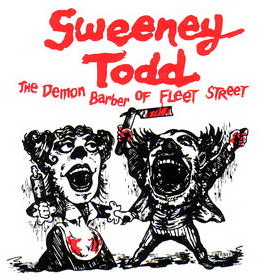
March 1, 1979.  On this date Broadway saw Sweeney Todd: The Demon Barber of Fleet Street, a musical thriller created by Stephen Sondheim and Hugh Wheeler.  The story originated in Victorian times and had gone through many variations.  Todd is a barber who kills and robs his customers, after which his partner Mrs. Lovett disposes the evidence by turning them into meat pies.  You don't have to be a psychologist to see this as based in fear of barbers with straight razors and sellers of dubious cuisine.

Thursday, January 12, 2017

1/12/1972 Highsmith starts a game

January 12, 1972.  On this date Patricia Highsmith came up with the first sentence of Ripley's Game.  It is her third novel about the immoral Tom Ripley who hates murder, "unless absolutely necessary."  It has been filmed twice, in German and in English.

Wednesday, January 4, 2017

1/4/1975 Police Woman, cover girl

January 4, 1975.  The issue of TV Guide with this date featured Angie Dickinson, the star of Police Woman.  The show premiered in September and ran for four years on NBC.

Wednesday, April 13, 2016

4/13/1979 A Mysterious Bookstop opens its doors

April 13, 1979.  On this date Otto Penzler opened the Mysterious Bookshop in New York City.  It is still going, the oldest crime book store surviving in the U.S.A> and the only one in the Big Apple.

Friday, February 26, 2016

2/26/1974 The Dreadful Lemon Sky

February 26, 1974.  John D. MacDonald's The Dreadful Lemon Sky was published on this date.  It was his sixteenth novel about salvage consultant Travis McGee.  It was his second in hardcover.

Am I the only one who thinks he was getting a little desperate for color-involved titles at this point?  Give the man credit for courage, though: Using a title with the word "dreadful" and the word "lemon" is offering critics two temptations they would find it  hard to resist.

Saturday, January 16, 2016

1/16/1973 Spenser swaggers in

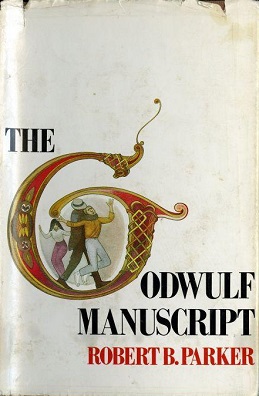
January 16, 1973.  This day saw the publication of Robert B. Parker's first novel, The Godwulf Manuscript.  It introduced Boston private eye Spenser.  Kirkus Reviews compared the new guy to Raymond Chandler's Philip Marlowe and sniffed "there's some of the toughness and the terseness but the hat's much too big for him and it hasn't got the right slouch."

Yet somehow, Spenser has survived. 

Wednesday, December 23, 2015

12/23/1971 Dirty Harry feels lucky

December 23, 1971.  This date saw the release of Dirty Harry, a movie that shaped thrillers for decades.  It was Clint Eastwood's first of five appearances as Dirty Harry Callahan.  In 2012 the National Film Register listed it for preservation as a significant film.

Thursday, December 17, 2015

12/17/1975 Rumpole courts TV

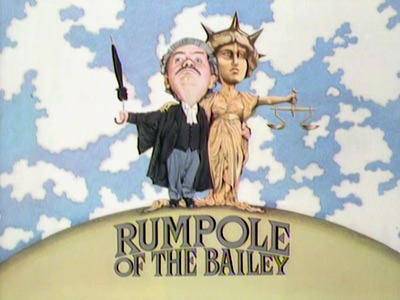
December 17, 1975.  This date saw the debut of a great character.  Barrister John Mortimer claimed that he invented Horace Rumpole as a retirement plan, and it certainly worked out that way.  The beloved and curmudgeonly advocate was in his sixties when he first arrived on the BBC, but he managed to keep plugging away on TV through 1992, and in books through 2009.

One inevitable problem with this longevity is that Rumpole, who was supposed to be a very minor barrister, defending hopeless cases in small British courts, became more successful (winning most of his cases in later years) and wound up appearing in an amazing number of venues: a Church of England inquiry, a medical investigation, a court martial, and an African court where the death penalty was a real possibility.  He wound up on trial himself, and - even less likely - once served as a prosecutor.  (Naturally he wound up proving the innocence of the man he was prosecuting.)

On TV Rumpole, whose motto was "Never plead guilty!", was played by Australian actor Leo McKern.  On radio he was played by Maurice Denham, Timothy West, and (inevitably) the unbiquitous Benedict Cumberbatch.

Monday, November 30, 2015

11/30/1974 Eric Ambler sorts the rubbish

November 30, 1974.  The Times Saturday Review of this date featured an article by great British spy novelist Eric Ambler with the unpromising title, "A Better Sort of Rubbish."  His argument was that the new generation of espionage writers like John LeCarre and Len Deighton were superior to the previous authors such as Sidney Horler and William Le Queux.

Ambler wrote spy novels for more than forty years, starting in 1936.  He won the Edgar and Gold Dagger Awards, each twice.  One of his screenplays was nominated for an Oscar.

Source: Peter Wolfe, Alarms and Epitaphs: The Art of Eric Ambler.

Wednesday, November 18, 2015

11/18/1976 Long Time, No See begins

November 18, 1976.  On this night a blind man was murdered in Isola, the first of a string of killings that kept the 87th Precinct guessing in Ed McBain's Long Time, No See.

Friday, October 30, 2015

10/30/1973 Travis McGee gets into hardcover

October 30, 1973.  This date saw the publication of The Turquoise Lament, John D. MacDonald's fifteenth novel about "salvage expert" Travis McGee.  In the series it is perhaps most notable for being the first in hardcover after a decade in paperbacks.  For the record, the plot involves an old acquaintance of McGee's who thinks her husband is trying to kill her.

Saturday, October 24, 2015

10/24/1973 Kojak arrives

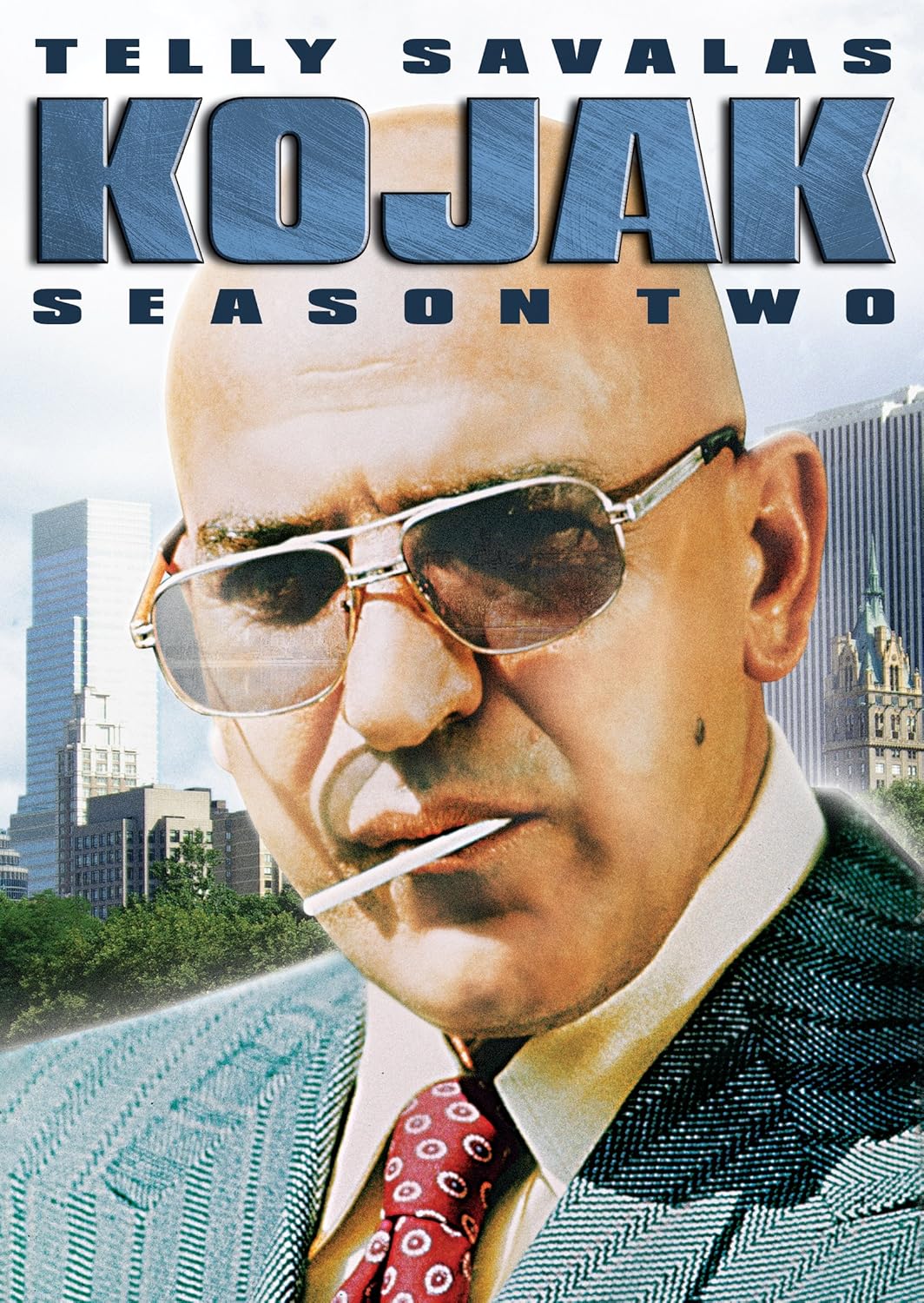
October 24, 1973.  Kojak premiered on this date, giving CBS a huge hit and making Telly Savalas a big star.  Theo Kojak's lollipops and "Who loves ya, baby?" became as famous as his bald head and Greek heritage.  It was a cop show set in New York City, inspired by a TV movie called The Marcus-Nelson Murders, also starring Savalas, and itself inspired by the Wylie-Hoffert murders which occurred in 1963.

The show won four Emmy Awards, among a ton of nominations, and mystery writer Joe Gores won an Edgar for a script.